Military healthcare, more specifically, Army Medicine, is a unique aspect of the healthcare field. Not only does Army medicine focus on the standard, everyday healthcare practices one would find in the civilian sector, but it also includes an abundance of specialized healthcare practices. These practices range from combat casualty care and training non-medical Soldiers to treat battlefield wounds to maintaining the medical readiness of the force, ensuring each and every Soldier is medically ready to complete their mission, regardless of where in the world they may find themselves.
For that reason, I have chosen to focus on Army medicine as my topic for this semester. Army medicine is near and dear to my heart because I served 14 years on active duty, and I also work in an Army ambulatory healthcare clinic as a public affairs officer in Fort Drum, New York.
Focusing on Army medicine this semester will allow me to develop new and exciting products for my clinic while learning how to think outside the box when it comes to the development of communication products. It will also allow me to highlight some of the outstanding medical professionals who are dedicated to the health and wellbeing of our Soldiers, their family members, and Army retirees of our tiny North Country, New York community.
Army medicine employs a diverse group of healthcare professionals, including general practice doctors, specialty care doctors, nurse practitioners, certified nurse midwives, combat medics, dental specialists, and even veterinary specialists, to name a few.
Luckily, photographs and other media taken for the use of government communications by government employees are considered to be public domain. Therefore, any media I either develop or acquire for the purpose of this course will not be copyrighted material and won’t require me to obtain permission before use. Besides, I already produced plenty of material I can work from, such as the photos below.
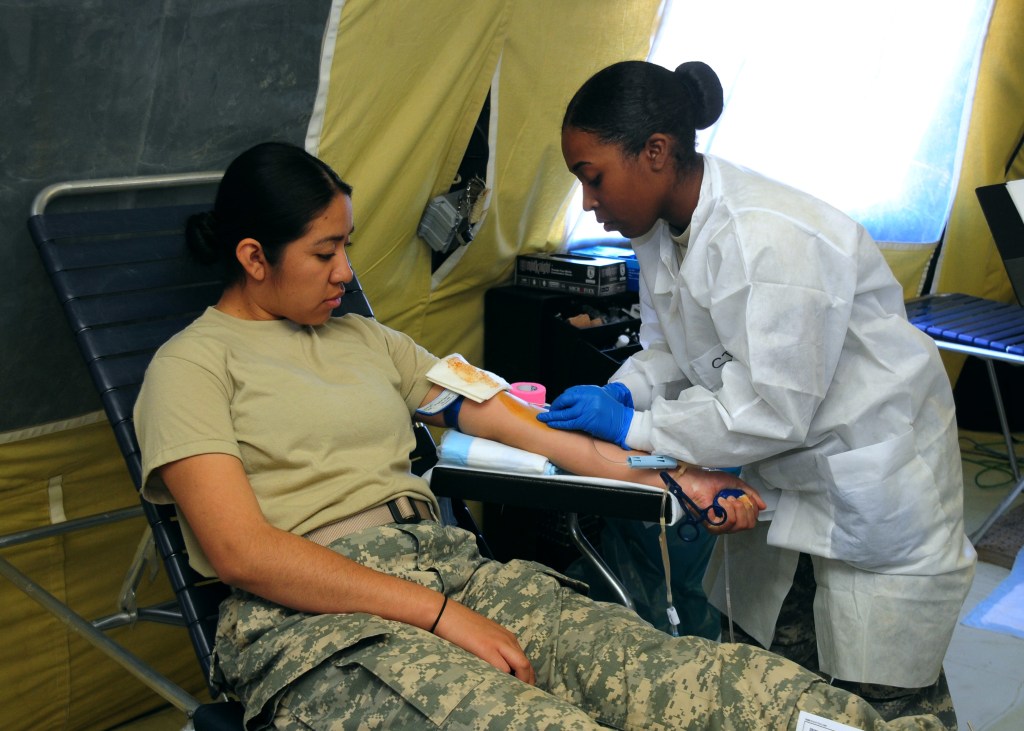
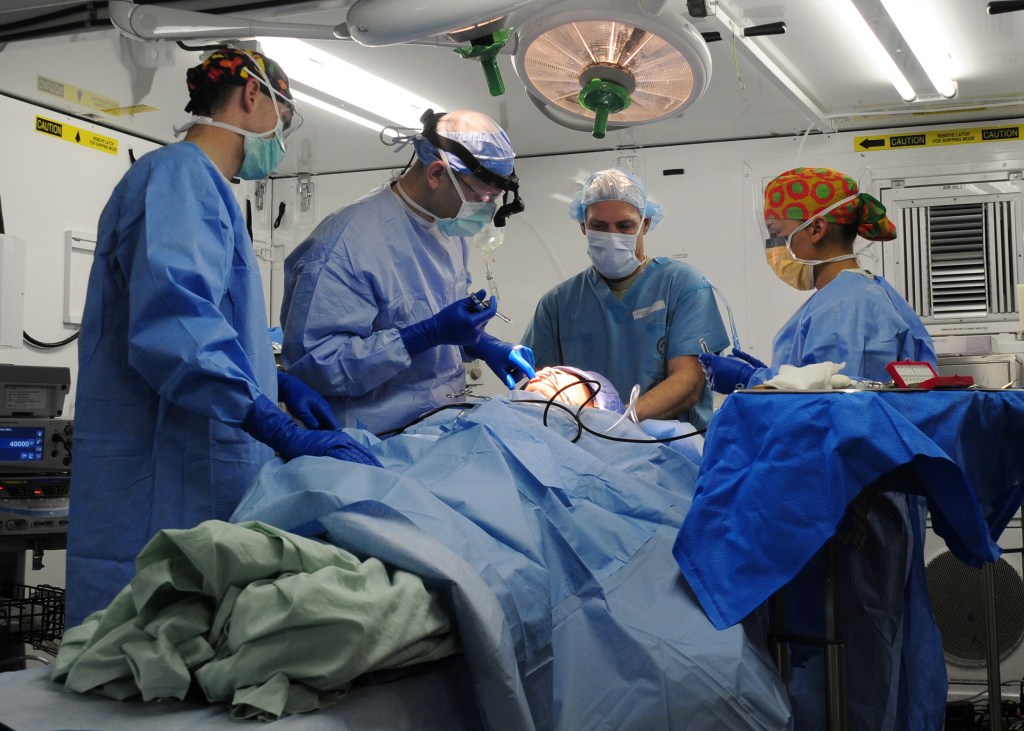
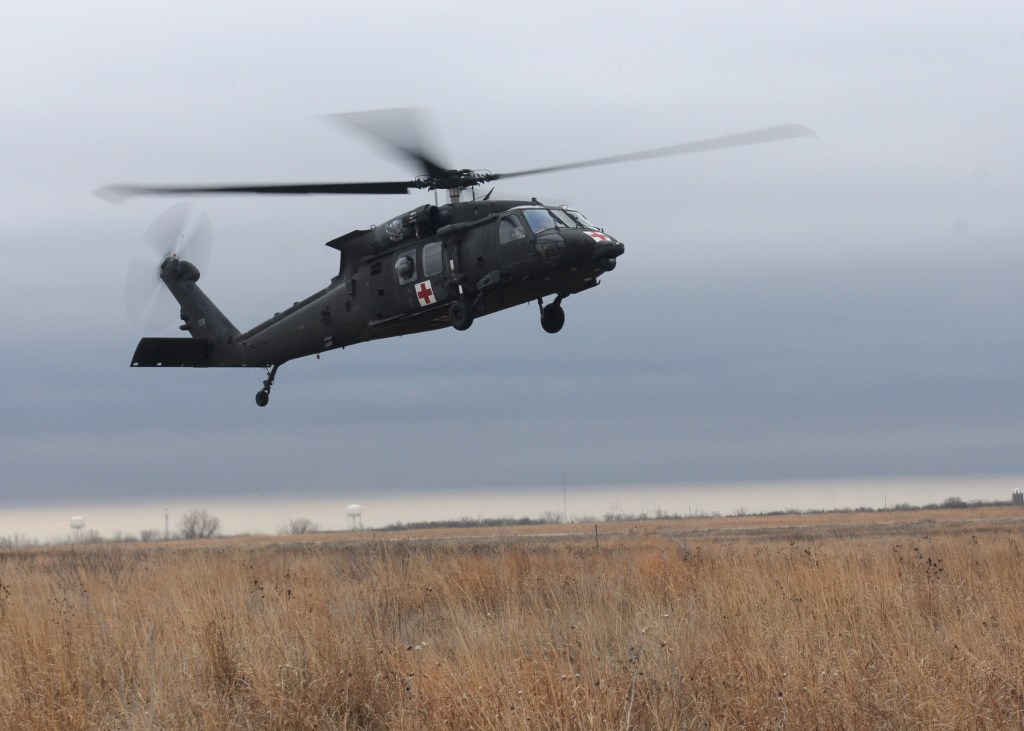
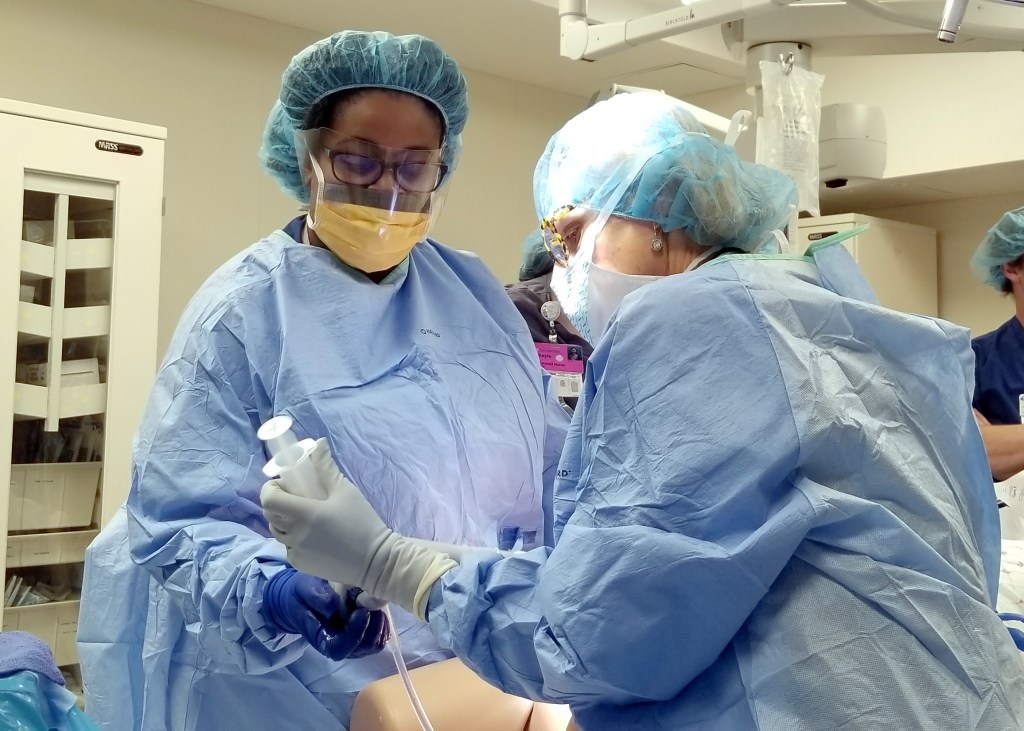
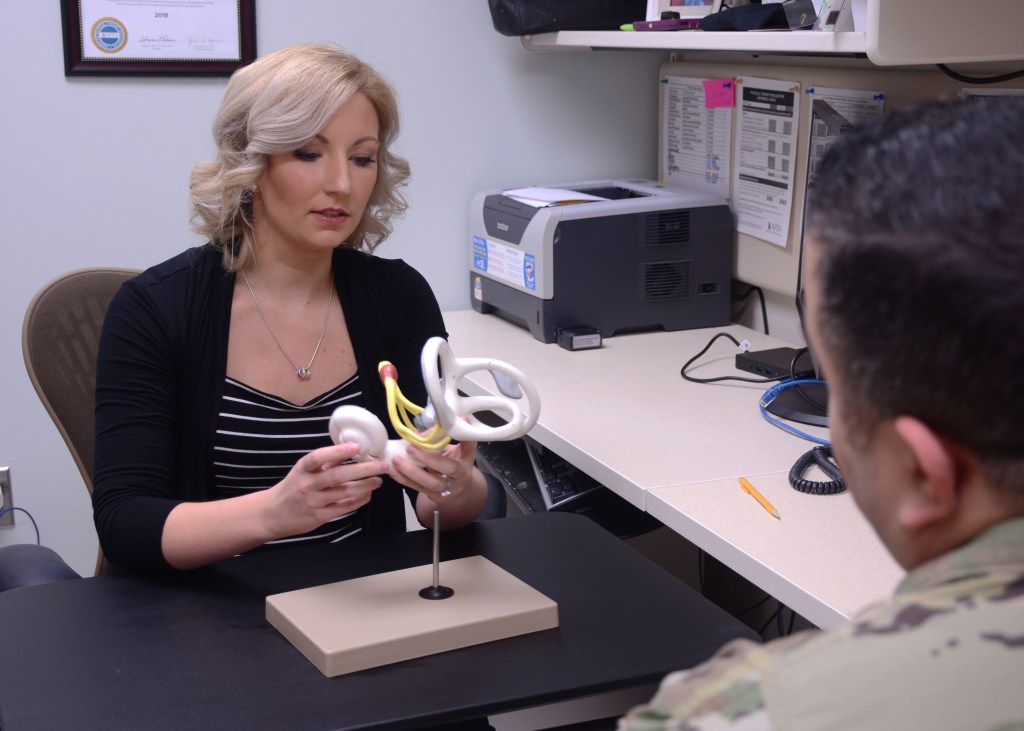
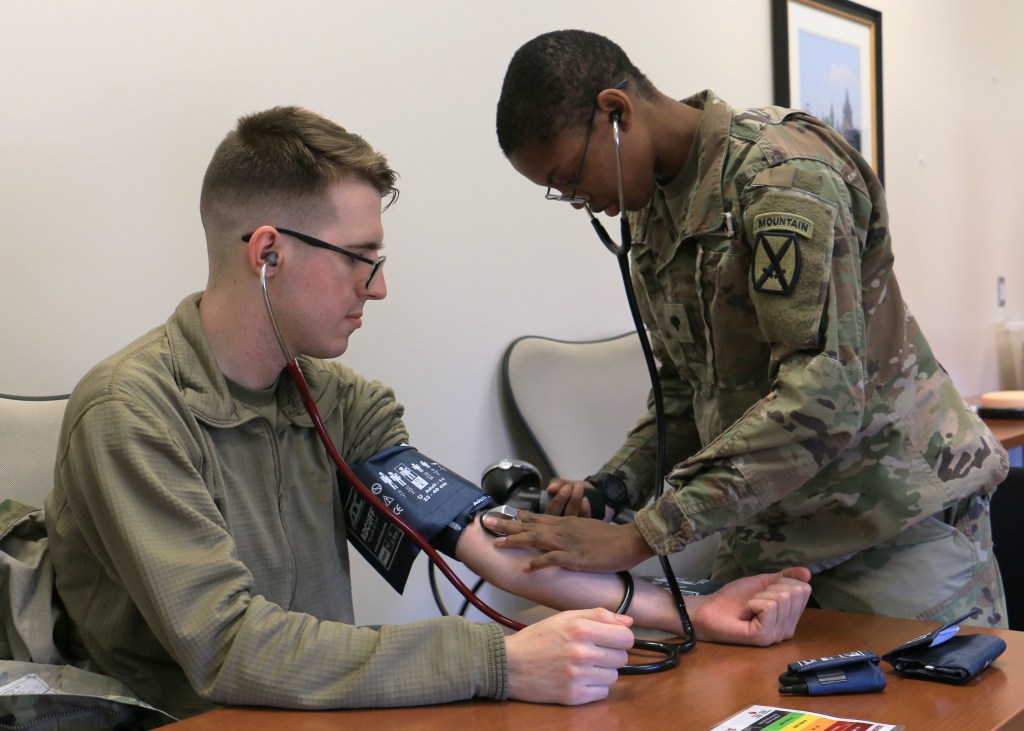
Spc. Susan Edwards-Seales (right), a medical laboratory technician with the 212th Combat Support Hospital, 30th Medical Brigade, 21st Theater Sustainment Command, and a native of Kansas City, prepares Pfc. Jennifer Ramirez (left), a medic with the 212th CSH and a native of San Diego, to have her blood taken during a blood drive conducted by the 212th CSH at the Miesau Army Depot April 21. The blood drive was the final portion of the 212th CSH’s more than weeklong multinational live exercise, or LIVEX, where the unit constructed a fully functional field hospital and performed various exercises and live procedures in order to practice operating in a field environment. (Photo by Staff Sgt. Warren W. Wright Jr., 21st Theater Sustainment Command)Medical professionals from the 212th Combat Support Hospital, 30th Medical Brigade, 21st Theater Sustainment Command, conduct a live wisdom tooth extraction during a live exercise, or LIVEX, at the Miesau Army Depot April 20. Patients volunteered to conduct their surgeries in the field so that Soldiers from the 212th CSH could practice performing medical procedures in a field environment. (Photo by Staff Sgt. Warren W. Wright Jr., 21st Theater Sustainment Command)Medics with Company C., 101st Brigade Support Battalion, 1st Armored Brigade Combat Team, 1st Infantry Division, practice using various hoists to lift casualties out of areas where helicopters cannot safely land during medical evacuation training at Fort Riley, Kan. March 8. The medics, with the support of the 2nd General Support Aviation Battalion, 1st Combat Aviation Brigade, 1st Inf. Div., used both a “Skedco Sked” basic rescue system and a rescue seat to evacuate simulated patients as the helicopter hovered about 50 feet off the ground. (Photo by Staff Sgt. Warren W. Wright Jr., 1st ABCT)WATERTOWN, N.Y. – Capt. Heather Irobunda (left), an obstetrics physician with the U.S. Army Medical Department Activity, Fort Drum, N.Y., works with a labor and delivery nurse from the Samaritan Medical Center to control the bleeding of a simulated patient during an emergency preparedness training scenario in Watertown, N.Y. June 7. Obstetrics and gynecology health care professionals from Fort Drum work side by side with their civilian counterparts at Samaritan to provide pregnancy, labor and delivery care to Fort Drum service members and their families. (Photo by Warren W. Wright Jr., Fort Drum MEDDAC Public Affairs)FORT DRUM, N.Y. – Elizabeth Kirkpatrick, the physical therapist for the Fort Drum Traumatic Brain Injury (TBI) Clinic, uses a model of the inner ear to demonstrate how a concussion can cause inner ear, or vestibular, damage which may result in dizziness, anxiety, depression, moodiness, balance problems and irritability to name a few. Healthcare professionals at the Fort Drum TBI Clinic provide comprehensive multidisciplinary strategies to help facilitate the rehabilitation and reintegration of service members who’ve suffered from a TBI. (Photo by Warren W. Wright Jr., Fort Drum MEDDAC Public Affairs)FORT DRUM, N.Y. – Spc. Natassja Blount (right), a healthcare specialist with the 7th Brigade Engineer Battalion, 1st Brigade Combat Team, 10th Mountain Division (Light Infantry), and a native of Little Rock, Ark., uses a manual blood pressure cuff to obtain blood pressure from Pfc. Drough Deguire (left), a healthcare specialist from the Fort Drum Medical Activity (MEDDAC) and a native of Temple, Texas, during the MEDDAC Nursing Skills Fair at the Bowe Troop Medical Clinic on Fort Drum, N.Y. April 17. (Photo by Warren W. Wright Jr., Fort Drum MEDDAC Public Affairs)